In 1977 the Safe Drinking Water Act was signed into the public health community, and water suppliers have made great strides in safeguarding the
nation's drinking water.
The Safe Drinking Water Act was the nation's first comprehensive national drinking water law. Under the law, every public water system must test for more than 100 contaminants. These tests are
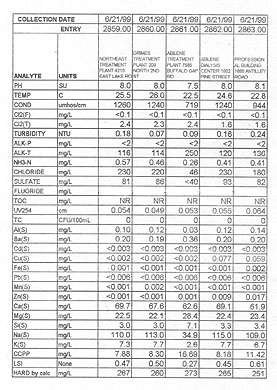
then studied by water utility professionals and state drinking water program offices to ensure they meet U.S. Environmental Protection Agency (EPA) standards. Our goal as a group was to assess if the water
treatment plants in Abilene were trying to conform to these standards. In doing so we worked closely with the Environmental Lab and the Northeast treatment plant to find out exactly where Abilene's water comes from, and what it
goes through before reaching you. Contrary to popular belief, Abilene's main water source is Lake Hubbard and not Fort Phantom. The city quit pumping from Phantom several months ago to avoid drying up the
lake. Abilene water supply actually comes from four sources: Lake Phantom, Lake Hubburd, Lake Abilene and ground water, and the resevoir. There are three treatment plants in Abilene. The Northeast
Plant, Grimes, and Abilene. Between the three they are capable of processing 51 million gallons of water each day. |